How termites find Conway houses
Eastern subterranean termites live in colonies in the soil and travel to wood through mud tubes. They need moisture, wood and a path from the ground to the structure. Conway gives them all three.
In the newer subdivisions on the north and west sides, land was cleared of trees and brush before the houses went up.
Roots, stumps and scraps of lumber left in the ground keep colonies fed until they find the house.
Termites get in through slab expansion joints, gaps around plumbing that comes up through the slab, and foam board or stone veneer that runs below the soil line where no one can see the tubes.
In older neighborhoods around downtown, Hendrix and UCA, many homes sit on crawlspaces with wooden piers and sill plates a foot or two above damp soil.
A leaking pipe, a blocked vent or a gutter that dumps water at the foundation is often where the trouble starts.
Signs to look for
- Winged swarmers inside the house in spring, often near windows, doors or a bathroom
- Piles of shed wings on windowsills or the floor
- Mud tubes on foundation walls, piers, plumbing or inside the garage
- Baseboards, door frames or subfloor that sound hollow or feel soft
- Bubbled paint or sagging spots in floors
A swarm outside, coming from a stump or a woodpile, means termites are nearby. A swarm inside means a colony is in or under the house.
The inspection
The technician walks the full perimeter, checks every point where wood or foam meets soil, goes into the crawlspace if there is one, and checks the garage, bathrooms, the water heater closet and any spots where plumbing enters.
They also note conditions that invite termites: mulch against the siding, wood stored against the house, leaking spigots, poor drainage and wood-to-soil contact at decks and steps.
For termites in Conway, the visit starts at the pet door and then follows whatever that shows.
Treatment choices
Termites near Prince Street corridor
A termiticide is applied to the soil along the foundation and, where needed, under the slab through small drilled holes that are patched afterward.
On a crawlspace home the soil is trenched along the inside and outside of the foundation and around piers. Modern non-repellent products are picked up by foraging termites and carried back to the colony.
Bait stations
Do not close up the stored firewood before the inspection for termites in Conway, or the useful evidence is gone.
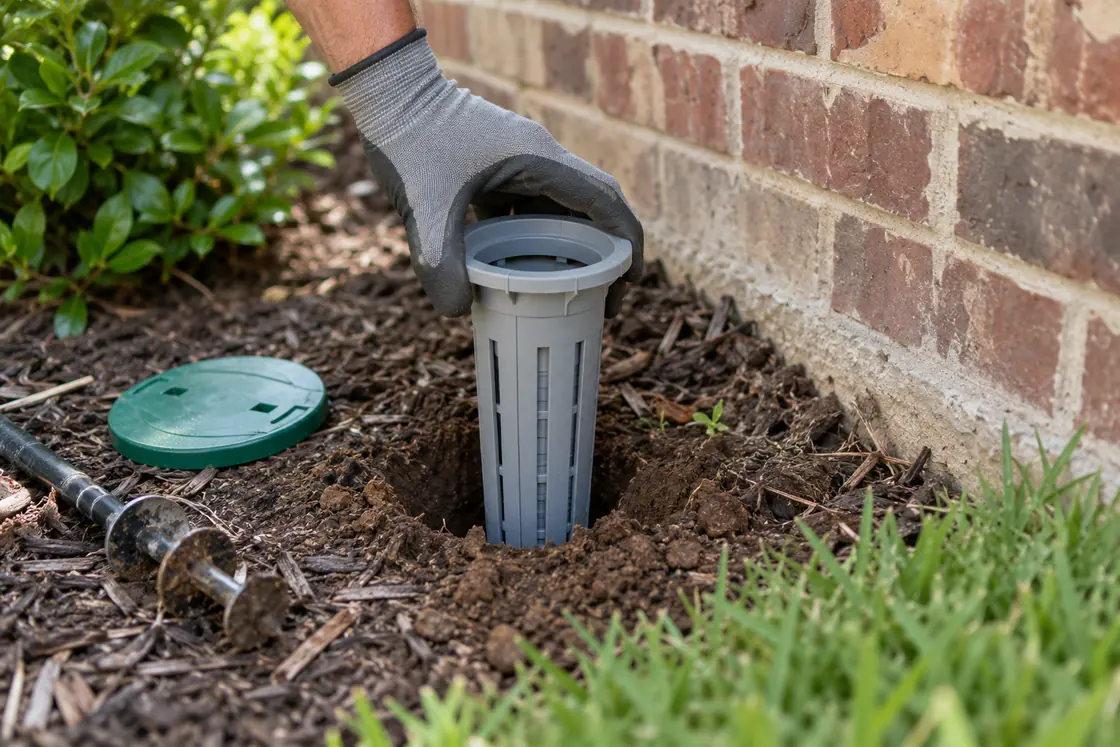
Baiting avoids most drilling and suits houses with patios, finished garages or wells where trenching is difficult, but it relies on regular monitoring visits.
Do not close up the stored firewood before the inspection for termites in Conway, or the useful evidence is gone.
Treatment works best when the conditions that drew termites are fixed.
The technician points out what to change: pulling mulch back, fixing leaks, clearing vents, breaking wood-to-soil contact. Some of this you can do in an afternoon.
New construction and pre-treatment
Many new Conway homes were pre-treated for termites before the slab was poured. That treatment wears down over time, and landscaping, additions and patios often disturb it.
If you know your builder's pre-treatment date and terms, have them when you call. If you do not, the inspection will tell you what is happening now.
Do not close up the stored firewood before the inspection for termites in Conway, or the useful evidence is gone.
We do not sell a termite treatment without finding termites or a real risk worth treating.
We do not quote without seeing the house, and we do not leave you guessing about what happens after the treatment.
You get told what follow-up or renewal looks like, what it costs and what it covers before you agree.
What to look for near Dave Ward Drive corridor
Call when you see swarmers, tubes or soft wood, and before you close on a house.
Call now and say what you found and where. A photo of the swarmers or tubes helps on the call.
Termite quick facts for Conway
- Species: the eastern subterranean termite, *Reticulitermes flavipes*, causes most termite damage in Faulkner County. It lives in the soil and reaches wood through mud tubes.
- Swarm season: usually March to May, on warm days after rain. Swarmers are dark, about 3/8 inch long, with two pairs of equal-length wings.
- Where they enter: crawlspace piers, sill plates, slab cracks, porch steps, plumbing penetrations and wood touching soil.
- Treatment types: a liquid soil termiticide applied as a continuous barrier, or a monitored bait system.
- Regulator: termite work in Arkansas is licensed and regulated by the Arkansas State Plant Board.